

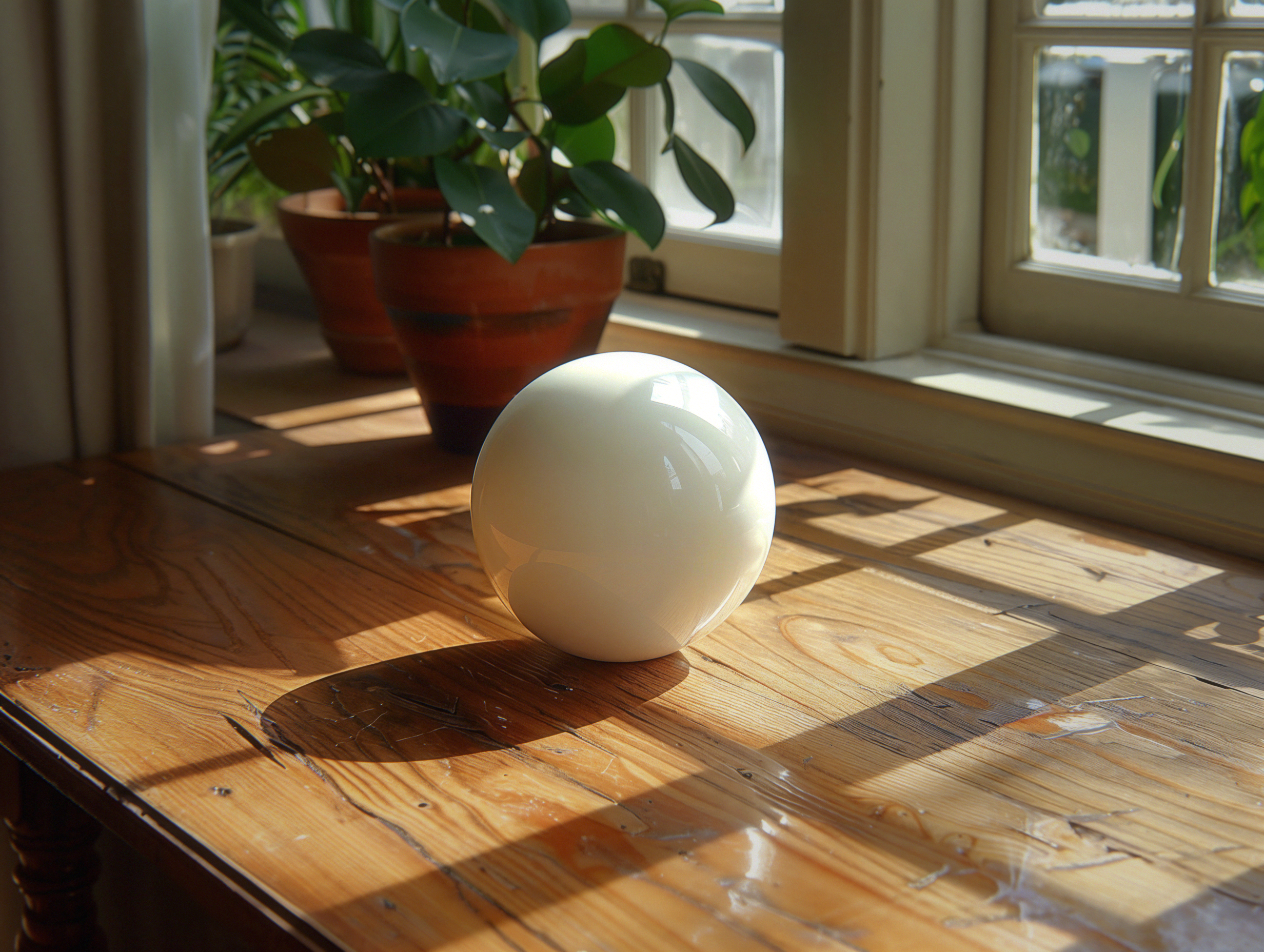
Light transforms this quiet scene into a study of precision and elegance. The white ceramic sphere rests on a textured wooden table, bathed in sunlight filtering through a nearby window. This interplay of light and shadow is a masterclass in the fundamental principles of how light behaves in the natural world.
The sunlight entering from the left creates a dynamic range of effects. The brightest highlight on the sphere marks the direct impact of the light source, illuminating the surface with crisp clarity. As the light curves around the sphere, it transitions into halftones, areas where the surface begins to turn away from the light. These halftones provide depth and a sense of form, guiding the viewer's eye across the object.
The terminator, the dividing line between light and shadow, is the key to understanding how the sphere interacts with its environment. This subtle boundary is softened by ambient light bouncing from the table below and the surrounding walls. Reflected light warms the shaded areas of the sphere, lifting them out of darkness and adding a nuanced glow. This phenomenon, known as diffuse reflection, demonstrates light’s ability to soften shadows and create a sense of continuity in the scene.
The wooden table plays an equally important role in this composition. Its rich texture and warm tone act as both a surface and a light source, reflecting sunlight back onto the sphere. These reflections create a connection between the sphere and its environment, grounding the object while emphasizing its three-dimensionality.
The shadows cast by the sphere and the window frame introduce a sharp contrast to the softness of the reflected light. The cast shadow directly beneath the sphere is the darkest area, where light from the window struggles to reach. Toward the edges, the shadow softens, blending into the table’s surface as light reflects and scatters. This gradient between hard and soft edges illustrates how the size and distance of a light source shape the shadows it creates.
Even the smallest details, such as the interplay of light bouncing between the sphere, the table, and the walls, contribute to the scene’s harmony. These interactions reveal light as not just an illuminator but a sculptor, shaping form, texture, and emotion in a single moment.
This quiet arrangement of light and shadow is more than a visual study. It highlights light’s endless complexity and its power to transform simple objects into stories of connection and balance.


Discussion