

In large organizations, collapse rarely announces itself. Calendars stay full. Reports circulate. Hearings conclude. The machinery keeps moving until effects appear elsewhere, later, no longer attributable to a single vote or office.
This is the dominant failure mode of the present. Not ignorance or malice, but continuity. Harm emerges from systems doing exactly what they were designed to do, long enough for responsibility to thin into process and timing to outrun authority.
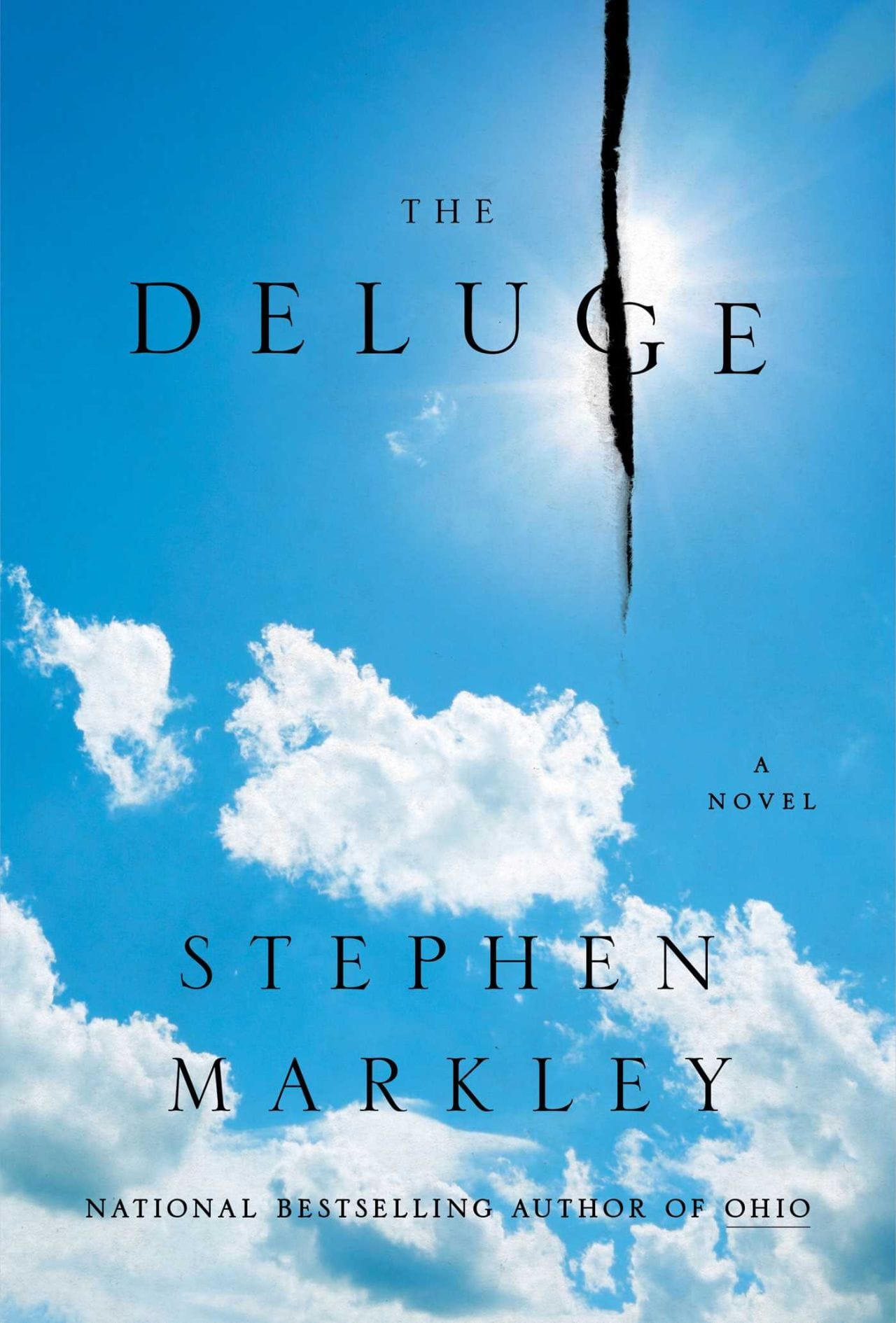
Stephen Markley’s The Deluge enters this terrain without consolation. It refuses moral compression. Instead of asking who is guilty, it reconstructs how rational behavior, repeated across domains, becomes catastrophic once scale and time misalign.
The book works by accumulation. Early on, a climate scientist receives a mailed powder threat that turns out to be cornmeal. The episode matters less as danger than calibration. Intimidation is absorbed into routine while the data remain unchanged. Elsewhere, activists begin inside procedural faith and end outside it, not because ethics fail, but because legitimate channels close sequentially for defensible reasons.
Later threads move through capital markets, electoral systems, and disaster response, showing each domain behaving sensibly on its own terms while amplifying the same outcome. No single decision tips the scale. The scale tips anyway.
Two claims recur by implication. First, institutions optimized for local success cannot register distributed, time delayed harm. Second, when legitimacy erodes faster than conditions change, extremism becomes a timing artifact rather than a psychological aberration. Markley stages these claims rather than argues them, letting competent actors collide with incentive walls they did not design.
Method matters. The novel is built with reporting instincts. Its confidence about legislative procedure, scientific labor, finance, and emergency response suggests sustained engagement with public records and technical literature. Form reinforces content. The dated structure and relentless cross cutting deny the reader a single arc of mastery. Fatigue is not incidental. It is diagnostic.
The limits are structural. Scale occasionally flattens character into function, and breadth sometimes substitutes proximity for causation. More notably, the novel is generous to institutional self preservation, attentive to drift but quieter about how careers and legitimacy bind people to continuity even after belief erodes.
What lingers is not warning or instruction, but reframing. When the next failure arrives packaged as continuity, another review cycle completed, another mitigation announced, the question is no longer who failed to act. It is whether action was ever legible inside the structures we entrusted to perform it.


Discussion