

Additive color is how most modern displays work. Every color you see on screen is made from red, green, and blue light added together.
You would think all three contribute to brightness equally. They don't. Your eye is far more sensitive to green than to red or blue, so green carries most of what you perceive as brightness.
Nuke has luminance math under the hood, and it shows up in how some operations behave, things like saturation, luma keys, and colorspace conversions. On normal footage, the colors and values are bunched together instead of spread across the full range, so differences are easier to miss.
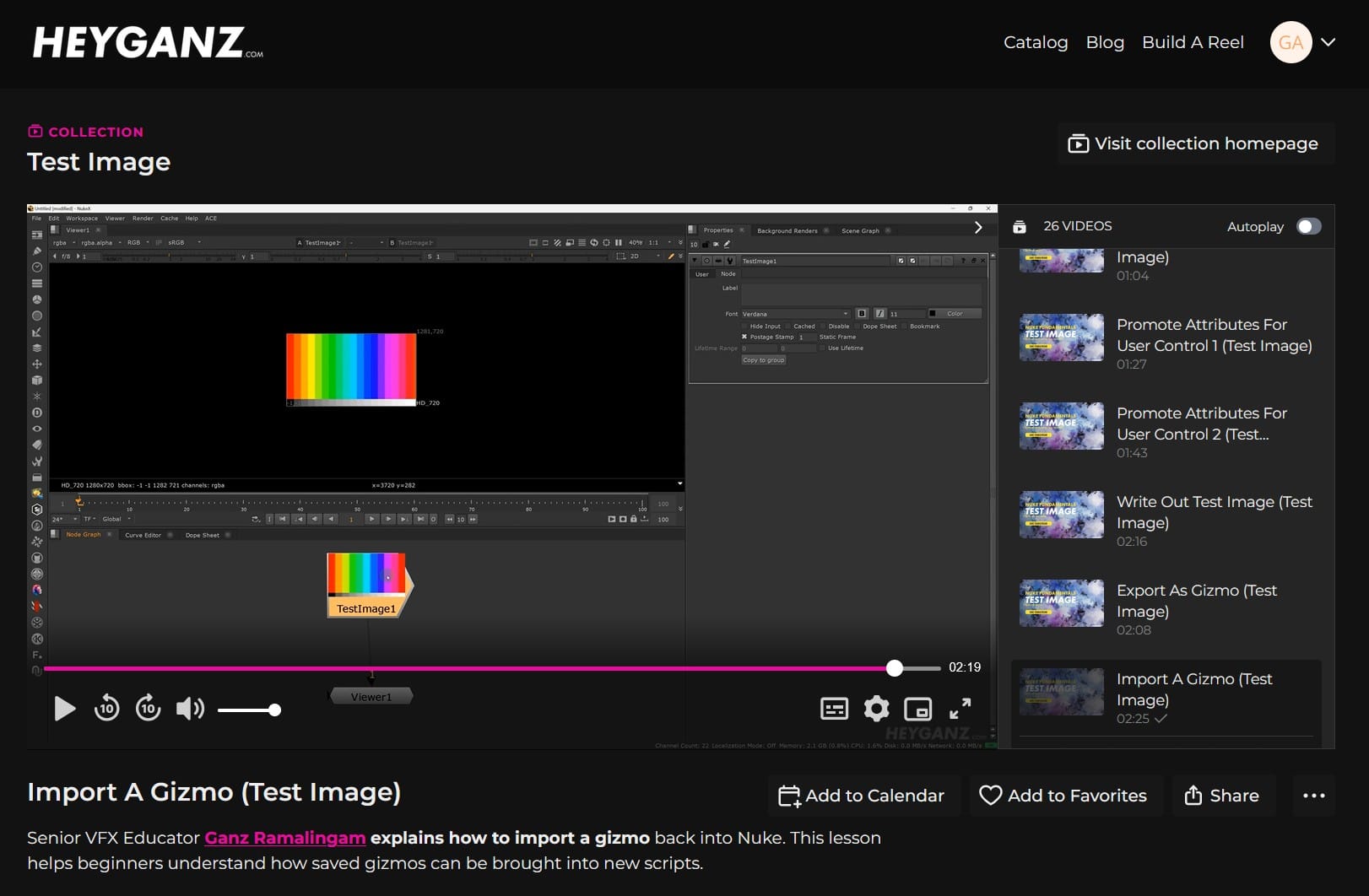
A test image spreads everything out on purpose.
That is why you need a simple test image before you learn color correction. A controlled reference where you can actually see what the color math is doing, instead of guessing.
That is what the first HeyGanz.com course builds from scratch.
https://lnkd.in/gg25DiBJ
- Ganz


Discussion